
Doctor’s ColumnNov 6, 2026
Melasma Laser in Seoul: What Pico Lasers Can and Cannot Do
Lasers can lighten melasma, but they do not cure it, and they can worsen it if poorly chosen. Melasma often returns, so treatment works best as a long-term plan that includes strict sun protection and usually topical treatment. Expect several sessions, and be wary of anyone promising to clear melasma in one Seoul visit.
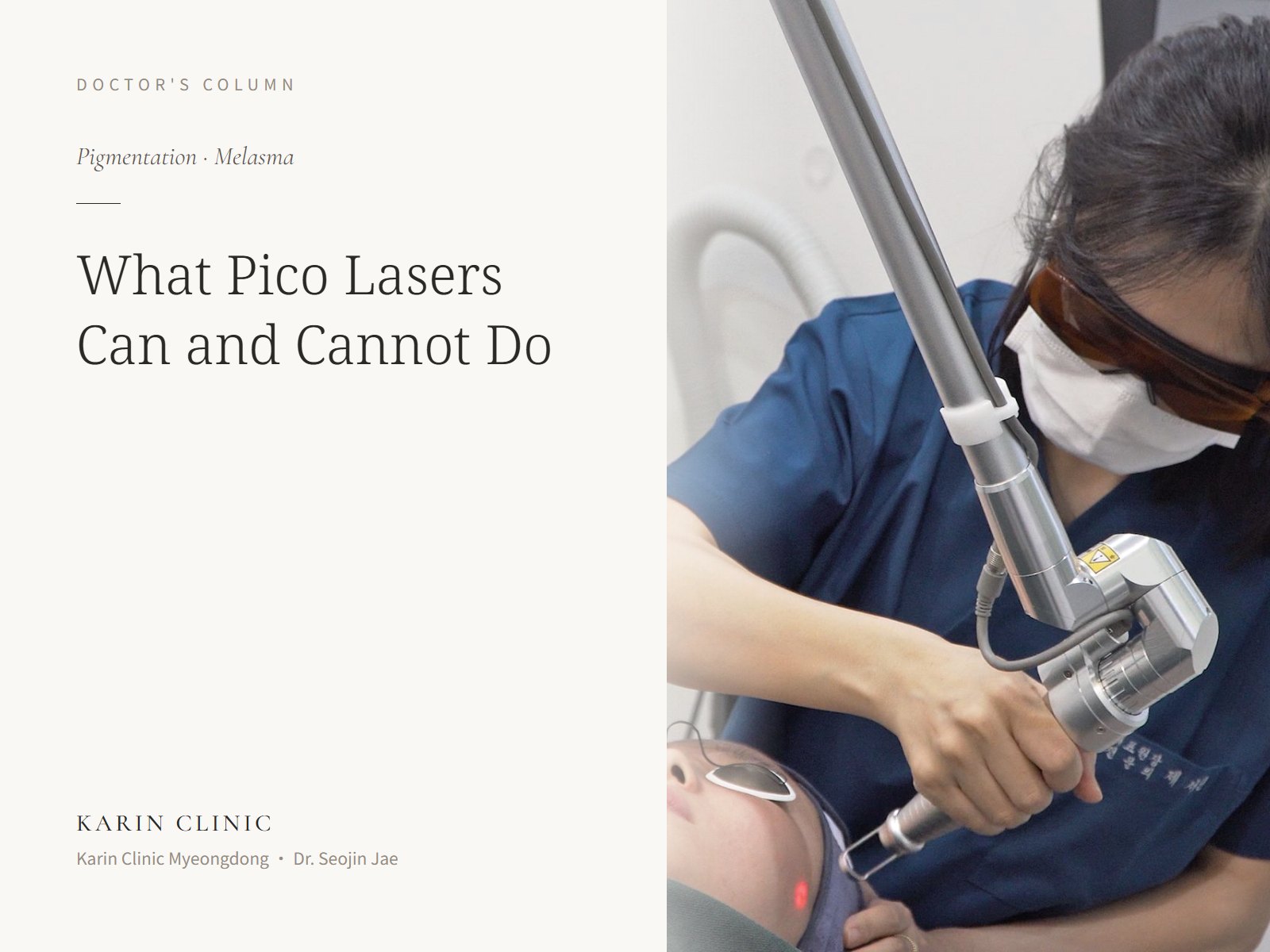
I want to start with the part you may not hear in an advertisement. If you have melasma, no laser I know of will remove it for good, and a laser used in the wrong way can make it darker. I still treat melasma with lasers, and I have performed more than 5,000 laser treatments. But the first step is an honest conversation about what you can expect.
Can a pico laser cure melasma?
No. Melasma is a chronic condition. The American Academy of Dermatology notes that it can last for years, or even a lifetime, and that sun exposure can darken existing melasma and cause new patches. DermNet, the dermatology reference, describes pigmentation reappearing after summer sun even in patients who responded well, and says the risk of relapse should be emphasized to set realistic goals.
What a laser can do is reduce pigment, as one part of a plan. The American Academy of Dermatology puts it this way: a few studies have found that adding laser or light treatment can improve results for patients already using topical medication and sun protection. Note the order there. Lasers are added to the basics, and they do not replace them.
What does the evidence say about lasers for melasma?
It is more mixed than most marketing suggests. A 2026 systematic review and meta-analysis of laser therapies for melasma, covering 52 studies and 1,058 participants, found that low-fluence Q-switched Nd:YAG produced a significant reduction in melasma scores. Picosecond and fractional lasers did not significantly outperform controls in the pooled analysis, and the certainty of the evidence was very low. The authors noted high recurrence rates and recommended combining laser therapy with sun protection and topical depigmenting agents.
Smaller studies of picosecond lasers in Asian skin are more encouraging. One 2017 report from Korea treated three patients with skin type IV, two with melasma and one with post-inflammatory hyperpigmentation, whose condition no longer responded to Q-switched laser. They tolerated treatment well, and none developed new hyperpigmentation over eight weeks of follow-up. With only three patients and no control group, this suggests a possibility, and it does not prove anything.
So I would describe PicoPlus to you as a tool that is reasonable to use for selected pigment problems, not as proven superior for melasma. If someone tells you a device is the definitive solution, ask to see the study.
Can a laser make melasma worse?
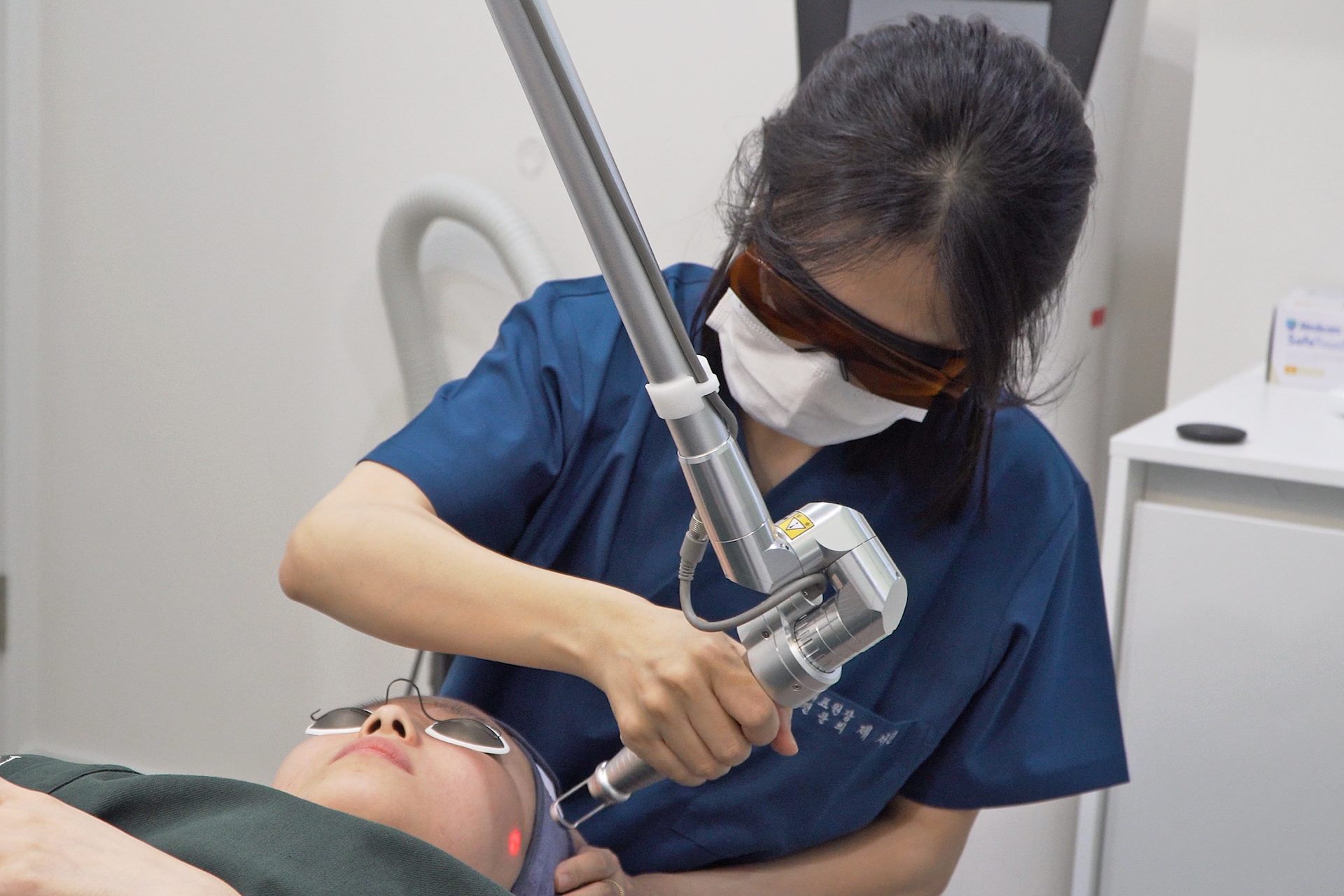
Yes. DermNet states that lasers can be used with caution, but carry a risk of worsening melasma or causing post-inflammatory hyperpigmentation. It also warns that certain lasers and light devices carry a high risk of relapse and of the disease becoming more resistant to treatment, so they require expert use. Rebound hyperpigmentation and mottled light spots have been reported, especially in darker skin.
This is why I am cautious about sweeping the whole face with one setting. It is also why the diagnosis comes before the machine. Not all dark patches are melasma, and treating a freckle and treating melasma are very different problems.
| Type of pigment | Where it tends to sit | How I generally think about it |
|---|---|---|
| Freckles, lentigines, blemishes | Shallow, in the epidermis | Often more clearly defined targets, with a more direct response |
| Melasma, hyperpigmentation | Upper dermis, often mixed | Conservative, long-term, with sun protection and barrier care |
| Nevus of Ota, stubborn melasma | Deeper, in the lower dermis | Needs a specific plan, usually over more sessions |
| Pigment together with flushing | Mixed: pigment and blood vessels | May call for Clarity II, sometimes combined with PicoPlus |
What is the difference between PicoPlus and Clarity II?
I offer both, because they do different jobs. PicoPlus delivers energy in picoseconds, with multiple wavelengths and handpieces, to shatter pigment into fine particles that the body gradually clears. Because the energy stays on the skin so briefly, heat to the surrounding tissue is reduced. Clarity II is a dual-wavelength laser with 755nm Alexandrite and 1064nm Nd:YAG. It is useful when pigment and redness are tangled together, and it has temperature sensing and cooling gas during treatment.
Depending on the lesion, the two are sometimes combined, and I decide the order and intervals after an assessment.
Every consultation is with Dr. Jae, in person.
How many sessions will you need, and what does it cost?
Deep melasma and complex pigmentation are often treated over several sessions, and the number depends on the type and depth of the pigment. I would not quote you a figure before examining you. The relevant prices at Karin Clinic are:
| Program | What it includes | Price (VAT not included) |
|---|---|---|
| Premium Pigment Package, 10 sessions | Personalized custom laser + soothing or brightening care, 1 LDM session and 1 PN booster ampoule session | 1,800,000 KRW |
| Laser Care, pigmentation treatment | Gold PTT + LDM + laser + modeling pack | 350,000 KRW |
All our prices are on the price list. The package is obviously designed for people who can return regularly, which leads to the question most international patients ask.
What can you achieve on a single trip to Seoul?
If you have melasma and only one short trip, here is what I think is realistic:
- A proper diagnosis. Knowing what type of pigment you have, how deep it is, and whether your barrier is healthy is valuable in itself. You can take that information home.
- A cautious first session, if it is appropriate. Sometimes it will be. Sometimes the right answer is to wait, particularly if you are tanned, or if your skin is irritated.
- A clear routine for afterward. Sun protection will do more for you over the next year than one session of laser.
What I would not expect is clearance. Some clinics advertise pigment removal in one session, and for a discrete spot that may occasionally be plausible. For melasma, I would be skeptical. If you live in Seoul, or stay for several weeks, a planned course is much more practical. My trip planning guide covers how to fit this around flights.
Who should wait, or avoid laser for now?
- If you are pregnant, or recently delivered. Pregnancy is a recognized trigger, and the American Academy of Dermatology notes that melasma can fade after delivery. It is often worth waiting.
- If you are tanned or sunburned, or you are about to go on a sunny holiday. Sun exposure works directly against this treatment.
- If you have had rebound from an earlier laser. Tell me exactly what you had and when. It changes the plan.
- If you will not commit to sun protection. I am serious about this one. Without it, you may be paying for a result that will not last.
What should you do after a laser session?
Most people return to daily life the same day. Temporary redness or fine scabbing may occur. Moisturize and protect your skin from the sun. DermNet advises year-round, lifelong sun protection for melasma, including wide-brimmed hats and very high-SPF sunscreen containing iron oxides, and the American Academy of Dermatology recommends broad-spectrum SPF 30 or higher, along with shade. Do not pick at any scabs.
Lasers do not fix a damaged skin barrier, either. If your skin is thin and reactive, I may address that first, sometimes with treatments such as those in my skin booster comparison. I do the diagnosis and hold the handpiece myself, at Myeongdong Station (Line 4) Exit 8. My background is on the doctor page.
Every consultation is with Dr. Jae, in person.
Frequently Asked Questions
Is PicoPlus good for melasma?
It can be a reasonable option for selected patients, as part of a wider plan. Pooled evidence does not show that picosecond lasers clearly beat controls, so I would not call it a definitive treatment. Diagnosis comes first.
Will my melasma come back after laser?
It can. Melasma tends to recur with UV exposure, hormones and lifestyle factors. Long-term sun protection is what most affects whether the improvement holds.
Is laser toning safe for darker skin?
It can be used in darker skin, but the risks of hyperpigmentation and rebound are real, so settings should be conservative. Ask about the practitioner’s experience with your skin tone, and how they manage rebound.
How long until I see results from a pigmentation laser?
Shattered pigment is cleared gradually by the body, and the tone brightens over time. The number of sessions and the intervals depend on the type and depth of the pigment, and this varies by person.
Can I have melasma laser treatment while on holiday in Korea?
Possibly, but plan your sun exposure carefully, and think about your schedule afterward. A beach holiday immediately after treatment is a poor idea, and one session is unlikely to clear melasma.
Every consultation is with Dr. Jae, in person.
References
- American Academy of Dermatology: Melasma: Diagnosis and treatment
- DermNet: Melasma
- Aljoaib NN, et al. Efficacy and Safety of Laser-Based Therapies for Melasma: A Systematic Review and Meta-Analysis. Cureus, 2026
- Lee YJ, et al. Treatment of Melasma and Post-Inflammatory Hyperpigmentation by a Picosecond 755-nm Alexandrite Laser in Asian Patients. Ann Dermatol, 2017